Travel guide · 4 min read · June 6, 2026
Why is international roaming so expensive?
International roaming is expensive because carriers charge each other wholesale rates for access to foreign networks, then add a retail markup on top. A single megabyte abroad can pass through two or three networks before it reaches your phone, and every hop adds a fee. Travel eSIMs avoid most of that chain by buying data wholesale directly from local operators, which is why the same data costs a fraction of roaming prices.
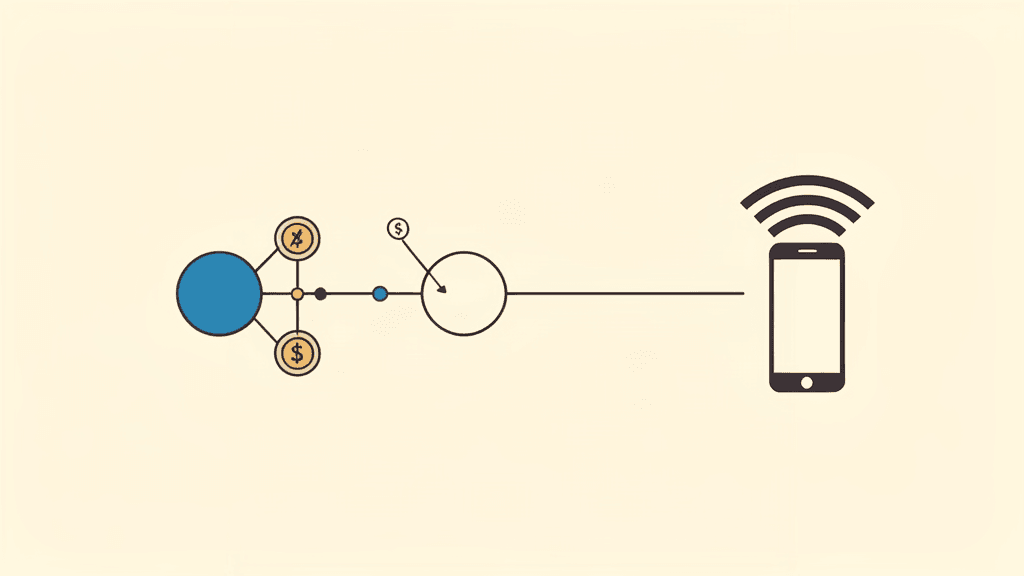
The short answer: your home carrier does not own the network you use abroad, so it pays another carrier for access and passes the bill to you with a markup. A travel eSIM shortens that chain.
The chain of middlemen
When you roam, your phone connects to a foreign operator's network. That operator bills your home carrier a wholesale rate per megabyte, and your home carrier bills you at a retail rate that can be 10 to 50 times higher.
Every border adds agreements, clearing costs, and margin. A carrier serving customers in fifty countries maintains roaming contracts with hundreds of partners, and the cost of that whole apparatus lands on roaming rates.
Where the markup comes from
Carriers treat roaming as a premium product because it is a low-volume, high-price line item. The infrastructure cost is spread across few users, so each gigabyte sold abroad carries a heavy share of overhead.
Daily roaming passes are priced to cover worst-case usage. A pass that costs $10 a day assumes heavy use, so light users effectively subsidize the plan's economics.
Why eSIMs break the pattern
A travel eSIM provider buys data wholesale from local operators in bulk, then sells it with a thin margin. No per-trip roaming agreements, no daily-pass pricing, no surprise bills a month later.
That is why a 5GB US plan on dizomo costs around $12 while five days of roaming can cost $50. The product is the same data; the distribution chain is not.
The practical takeaway
Roaming is not a tax you have to pay. Buying data through a travel eSIM before departure usually cuts the cost of staying online by 60% to 80%.
Install at home over Wi-Fi, and on arrival your phone connects to a local network the same way it would at home. The only difference is the price.
Frequently asked questions
Why does roaming cost so much more than local data?
Roaming data passes through foreign networks that charge your home carrier wholesale rates, plus retail markup and daily-pass pricing. A travel eSIM buys local data wholesale directly, which removes most of the chain.
Is roaming ever cheaper than an eSIM?
Rarely. Some carrier plans include a few free roaming days or a subsidized pass, but for any trip longer than a day or two, a travel eSIM is usually 60% to 80% cheaper.
Does an eSIM work like roaming?
No. An eSIM connects your phone directly to a local network using a profile you installed before the trip. Your home carrier is not involved in the data path.
Get data before you fly
Compare real prices across 190+ countries and install your eSIM in about two minutes.